
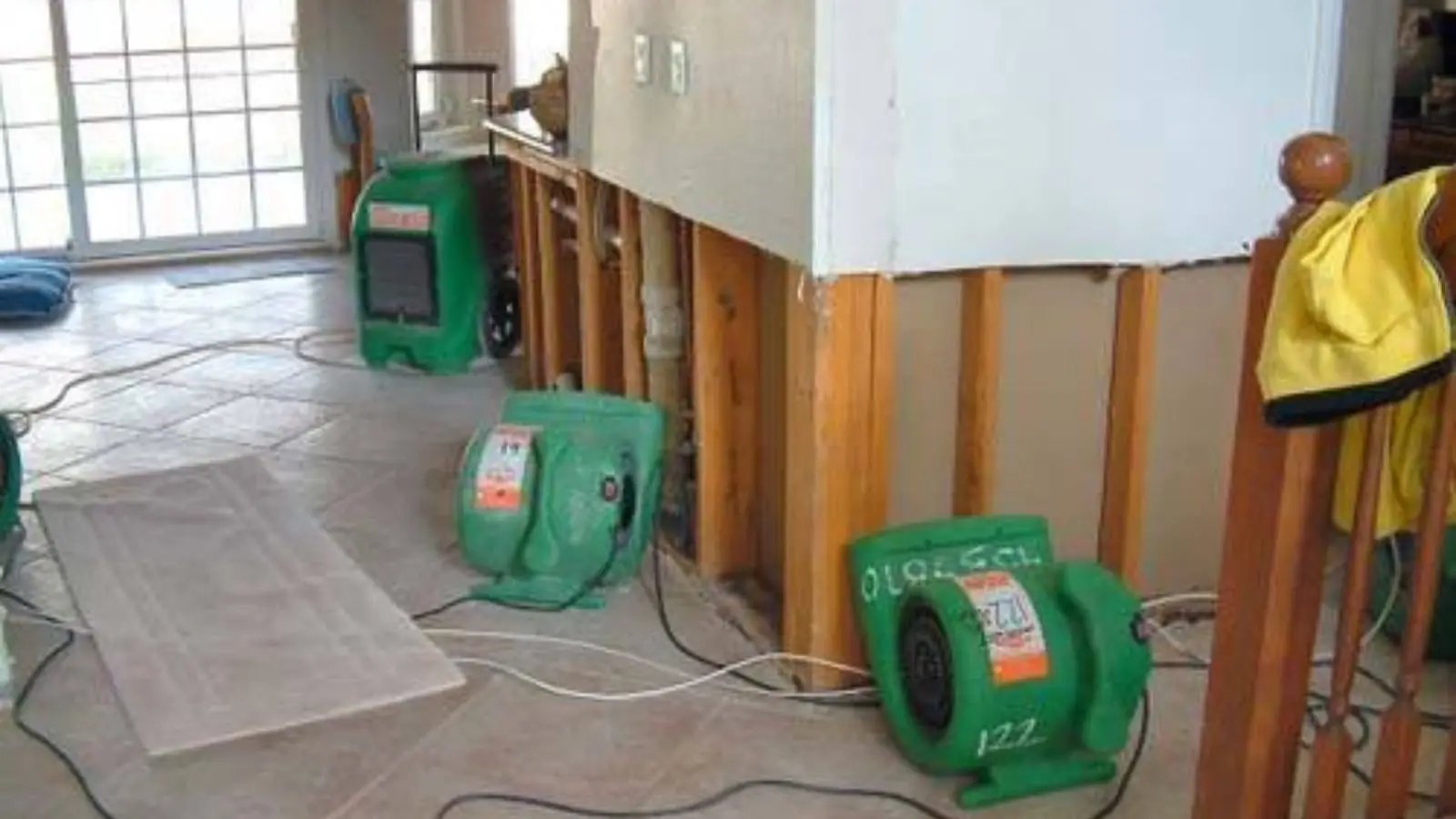
Mitigation is what keeps a Manhattan Beach, CA water loss from getting bigger by the hour. A crew cuts the supply to the leak, pulls out whatever is pooled and sets up drying gear before framing and subfloors take on more moisture. If water is still moving through the house, the 24/7 line is open and the call is worth making now.
Until someone arrives, shut the main valve and get valuables up off the floor. Sparks or a gas smell mean 911 or the utility comes first. Anything that might be contaminated stays off limits to kids and pets.
Wet wall, damp carpet or a musty smell? That points to water mitigation
Few people search for mitigation by name. They notice a soft spot at the bottom of a wall, carpet that squishes near the baseboard, or a sour smell in a closet after a leak. All three mean moisture is still sitting inside the building, and water mitigation is the trade that finds it, pulls it out and dries it before it does more harm.
When water is spreading through a Manhattan Beach home
Water follows gravity and the easiest path. A failed supply line upstairs can send water through a ceiling, down a wall cavity and into the flooring below, and each new wet surface becomes one more thing to dry. Up in the Hill Section, where lots slope, water reaching a lower level or garage tends to spread across the slab and wick into baseboards.
The City of Manhattan Beach's own Public Works water memo puts average use near 120 gallons per person per day, about 90 of it indoors. A burst line can discharge a large share of that in a single hour, which is why locating the valve before you need it is the best preparation. If standing water already covers the floor, emergency water removal is the first step, and mitigation carries on from there.
Stop the source
Close the fixture shutoff or the main valve. If you cannot find either, say so on the phone and we will talk you through the likely spots.
Cut power only when it is safe
Flip breakers for the soaked rooms only when you can get to a dry panel without wading. If you cannot, leave it alone and phone the utility or 911.
Lift and protect
Raise furniture legs onto foil or blocks, pull rugs and boxes off wet floors, and move electronics to dry ground.
Photograph before you move things
Take wide and close shots of the water, the source and the damaged items. They help the insurance file later.
Stay out of suspect water
Anything that backed up from a toilet or drain, or flowed in from outside, could be contaminated. Children and pets stay clear until a crew has checked it.
Wet walls or damp carpet today?
The first day decides how much has to be torn out. Call the 24/7 line and describe what is wet.
Where mitigation calls start in Manhattan Beach
The causes are ordinary: a washing machine hose that lets go, a water heater that leaks overnight, a shower pan that fails above a ceiling, a roof that admits rain along a flashing. The neighborhood changes the access more than the cause.
A home in the gated Manhattan Village area needs a gate code ready so equipment is not held at the entrance, while a house in the Tree Section along Walnut, Pine or Elm needs parking cleared near the door for extraction units and dehumidifiers.
Whether the house is out by The Strand or over near Aviation Boulevard, tell dispatch the cross streets and anything awkward about getting in. A short note about access spares the crew a wasted stop.
What the first 72 hours look like
Mitigation follows a sequence, and skipping a step usually costs time later. The goal is to reach a dry standard for every material, not to make the surface feel dry.
Inspect and map moisture
Moisture meters and a thermal imaging camera show wet areas hidden behind paint, trim and flooring. The map decides where equipment goes.
Extract standing water
Pumps, extraction units and wet vacuums remove water from floors and carpet. Less water left behind means less to evaporate.
Remove what cannot be saved
Saturated carpet pad, wet insulation and the lower section of soaked drywall often come out so the cavity can dry.
Set drying equipment
Air movers, LGR dehumidifiers and sometimes injection drying for wall cavities and hardwood are placed according to the map.
Monitor until dry
Readings are taken again each visit. Equipment comes out only when materials reach the dry standard for that material.
Structural Drying
Structural drying is the controlled removal of moisture from framing, subfloors, wall cavities and other parts of the building that hold water long after the surface looks dry. Wood studs, plywood and the paper face of drywall absorb water quickly and release it slowly.
Air movers push dry air across wet surfaces to lift moisture off them. LGR dehumidifiers (low grain refrigerant units) capture that vapor from the air, which keeps it from condensing on cooler walls elsewhere in the house. The two work as a pair, and closing the affected rooms keeps the dehumidifiers from drying the whole house.
Drying is measured, not guessed. A crew compares readings in wet material against readings in a dry reference spot of the same material and keeps the equipment running until the two match. That is why a floor that feels dry on day two can still be on the schedule for day four.
Signs the water has gone deeper than it looks
Surface dryness fools almost everyone. These signs suggest water has reached framing or the subfloor and a meter reading is worth more than a look.
Cupped or lifting flooring
Planks with turned-up edges, or seams that start to lift, are taking up moisture from beneath.
Paint bubbling near the baseboard
A blister in the paint often sits over a wet drywall edge that dried on the outside only.
A musty smell with no visible source
The odor usually comes from a damp cavity, a wet pad or insulation. Opening a small inspection hole finds it.
One warm, humid room
Air that feels heavy in a single room can mean a hidden wet area slowly releasing moisture.
Stains that keep returning
A ceiling stain that fades and comes back after a dry spell points to a slow leak or wet insulation above.
Spot any of these a day or more after a leak and assume moisture is still active. Federal guidance puts the target for drying at roughly one to two days, and past that point the conversation shifts toward mold remediation.
Mitigation options and their trade-offs
There is rarely one correct path. The right plan depends on how long the material was wet, what the water carried and how much the household can tolerate in noise and disruption. This table shows how the common approaches compare.
| Approach | Works best when | Trade-off |
|---|---|---|
| Extract and dry in place | Clean water, short exposure, materials still intact | Equipment runs for several days and is loud |
| Targeted removal, then dry | Pad, insulation or lower drywall is saturated | Adds rebuild work afterward but stops hidden moisture |
| Injection drying of cavities | Wall or floor cavities are wet but the finish is worth keeping | Slower to set up and needs careful monitoring |
| Fans only | A small, clean spill on a hard surface | Cannot reach wall cavities or subfloors |
Whatever route is chosen, the rebuild comes after drying, and that is the work described on the water damage repair page.
Pricing a mitigation job
An inspector walks the property, maps the moisture and lays out the findings, the scope and the way the price is built, and all of that happens ahead of any work. Two houses with identical stains can call for very different plans, so the explanation rests on your readings. Five things push the scope up or down.
| What varies | Effect on a mitigation job |
|---|---|
| Water category | Clean, gray and black water each call for their own removal and sanitizing routine |
| Affected area | Each extra wet room adds machines, hours and monitoring visits |
| Materials involved | Hardwood, pad, plaster and drywall give up water at different speeds |
| Drying days and equipment | How many air movers and dehumidifiers run, and for how many days |
| Rebuild scope | Opened walls or floors turn into a separate rebuild phase |
Coverage turns on how the water arrived. A burst fitting is the kind of event policies tend to cover, a slow drip left for months often falls outside, and flood is typically a separate policy altogether. Your insurer can say what applies, so open the policy early and save each receipt tied to emergency protection of the property.
A number built around your own rooms starts with a call to (424) 550-5662.
Mitigation across the Beach Cities
Crews working a loss in Manhattan Beach often serve the neighboring beach city to the south as well. Conditions differ next door, and the Hermosa Beach service page explains how that city's groundwater situation affects a wet below-grade room.
Should drying require opening walls, requirements differ from one jurisdiction to the next. A quick question to the building office, which in this city sits on Highland Avenue, can keep a rebuild from stalling after demolition.
Common questions, answered for Manhattan Beach
Do you handle water mitigation emergencies at night or on weekends in Manhattan Beach?
We do. Phones are staffed around the clock, holidays and weekend nights included, and a crew can often go out the same day when one is open. Tell dispatch where the water is coming from and work through the shutoff steps above while the visit is set up.
No arrival time is promised, though you will always get instructions for the wait.
What is the difference between water mitigation and water damage repair?
The first phase halts the damage and dries the building, typically within a few days. The second puts back what was removed, like drywall, flooring and paint, once readings confirm dryness. The two are separate phases, and doing repair before drying is complete is a common cause of repeat problems.
What equipment is used and how long does drying take?
The main tools are moisture meters, thermal imaging cameras, air movers and LGR dehumidifiers, with extraction units used first when water is standing. Drying often takes several days, and the exact length depends on the material, the amount of water and the readings. Mold prevention depends on getting wet areas dry inside about two days.
The crew places and monitors the equipment, and it is not handed over for homeowners to run.
My carpet feels damp but I cannot see where the water came from. Is that mitigation?
Very likely. Damp carpet with no visible source often means a slow leak behind a wall, under a fixture or from an appliance line. A meter and a thermal camera follow the wetness to its origin, and drying starts from there.
Does mitigation include mold removal?
No. Mitigation aims to dry the building fast enough that mold does not start. If growth is already present, that is a separate scope handled under mold remediation, which includes containment and cleaning to the ANSI/IICRC S520 standard.
Can I rent fans and dry the house myself?
For a small, clean spill on a hard floor, household fans may be enough. For wet drywall, insulation, subfloors or any water that stood for a day, fans cannot reach the moisture inside the cavity. A moisture map tells you which situation you are in.
Will my insurance cover mitigation?
Your policy and the origin of the loss decide. Read the policy, ask your insurer, and keep photos and receipts in one folder. Hold off on throwing anything away until the adjuster gives the go-ahead.