
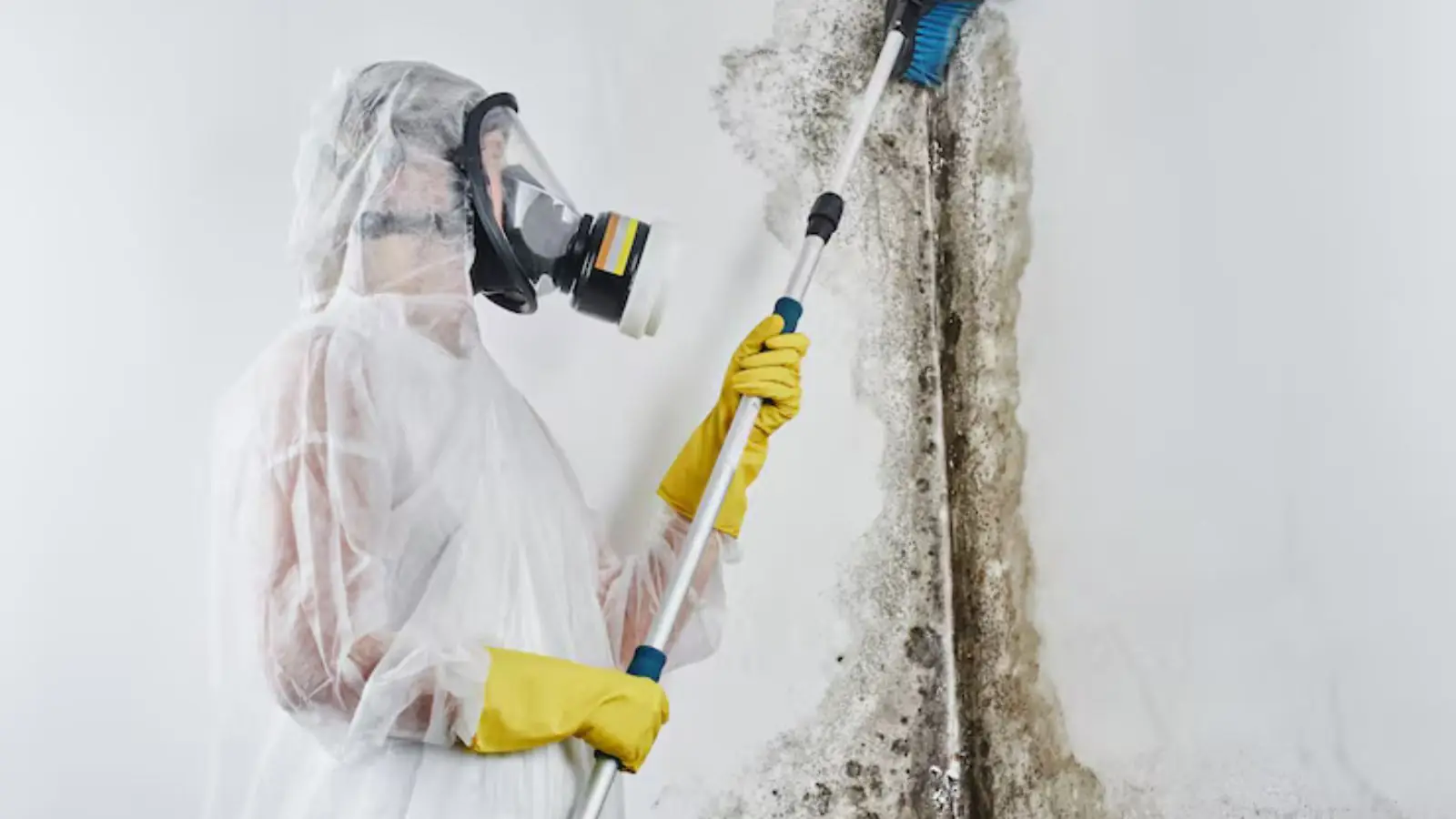
Mold remediation in Manhattan Beach, CA is the containment, removal and cleaning of mold growth, followed by finding and fixing the moisture that fed it. Mold needs moisture to grow, so the leak or humidity problem is always part of the plan. Our line is answered 24/7 if you want an inspection scheduled.
Professional work follows the ANSI/IICRC S520 standard, a published industry standard for mold remediation, so asking a company whether its crews follow it is a reasonable first question. We do not diagnose illness or make health claims. Questions about how mold affects a person belong with a physician.
Dark spots in a closet, a musty room or a wet spot on the wall? Here is what that usually means
Most mold calls begin with a symptom rather than a diagnosis: a few dark spots in the corner of a shower ceiling, a wet patch in a closet, carpet that smells sour when pulled back. Each one is a sign that moisture has been sitting somewhere for a while. Mold remediation is the trade that confirms the growth, removes it safely and corrects the moisture source.
Why mold shows up after a leak
The EPA states plainly that the key to mold control is moisture control. Its guidance is to dry anything that got wet inside about two days, and to hold indoor relative humidity under 60 percent, with 30 to 50 percent the better target. Mold usually appears when a wet material is missed, not because a house is dirty.
In Manhattan Beach, the likely sources are the ordinary ones. Think of a toilet supply line that weeps inside a wall, a sink drain under a vanity, or an air conditioner condensate line that backs up. A roof flashing that admits rain and siding that lets water reach the sheathing are other common sources. Bathrooms and closets on exterior walls are the usual places where small leaks go unnoticed for weeks.
Spotted something that looks like mold?
Call to talk through what you see, where the water came from and how to schedule an inspection.
Mold Testing and Inspection
An inspection starts with the water, not the mold. The inspector looks at visible growth, uses a moisture meter to find wet materials, and may use a thermal imaging camera to spot cold, damp areas behind finishes. The goal is to identify how far the moisture spread and where it came from.
Sampling is not always needed. The EPA notes that in most cases, if visible mold growth is present, sampling is unnecessary, and that no federal limits have been set for mold or mold spores, so a lab result cannot be checked against a federal standard. Where sampling is used, it is often to confirm that an area was adequately cleaned after remediation.
That is the idea behind independent clearance testing. A third-party tester, who has no stake in the cleanup, takes samples or runs visual and moisture checks after the work is done. The report states whether the area meets the criteria set for the job. It is a document you can show a buyer, a landlord or a lender.
Mold Removal and Black Mold Cleanup
Removal starts with containment. Plastic sheeting seals the work area, and negative air machines with HEPA filters draw air out so spores are not carried into the rest of the house. Workers wear protective gear, and the work area is cleaned in a set order from top to bottom.
Porous materials such as drywall, insulation and carpet pad that carry growth are cut out and bagged. Solid materials like framing are cleaned with HEPA vacuuming and damp wiping, and sanding may be used on wood. The EPA notes that dead mold must still be removed, not just killed, which is why wiping with a household product is not remediation.
The term black mold describes a color. Color alone does not identify a species, and only laboratory analysis can do that. Most plans do not depend on the name: visible growth is removed, the moisture is corrected and the area is checked afterward. Black or green, the work is the same.
Mold After Water Damage
If a leak or flood has already happened, the order of work matters. The water must be stopped and the materials dried before or alongside mold removal, or the growth simply returns where the moisture remains. That is why water mitigation often comes first or runs in parallel.
A fix for the leak itself comes before everything else. A toilet supply line, a sink drain, an air conditioner condensate line, a roof flashing or a section of failed siding all have to be repaired or the whole job restarts. Remediation crews work with plumbers and roofers rather than substituting for them.
After removal, the rebuild follows. Drywall, insulation and flooring that were cut out are replaced, which is covered on the water damage repair page. Rebuilding before the clearance check is a mistake, since it closes up the evidence.
How the size of the area changes the plan
The EPA advises that if the moldy area is less than about 10 square feet, most people can often handle cleanup themselves by following its guidelines. Larger areas, or mold with significant water damage, call for professionals. The table summarizes common situations.
| Situation | Common approach |
|---|---|
| Small surface spot under about 10 square feet, cause already fixed | Household cleanup following EPA guidance, then watch for moisture |
| Growth over about 10 square feet or recurring in the same spot | Inspection, containment and professional removal |
| Mold inside a wall, ceiling or under flooring | Professional work, since the cavity has to be opened and checked |
| Mold after a flood or sewage event | Water cleanup first, then remediation, see flood damage restoration |
| Musty smell with no visible mold | Moisture inspection to find the hidden wet area |
When outside water was involved, the flood damage restoration page explains how floodwater cleanup and mold work are sequenced.
Mold clearance for a home sale or a loan
Real estate deals sometimes stall on mold. A buyer's lender or a purchase contract may require that mold be removed and the area verified before closing. Remediation, a written scope and independent clearance testing together create the paper trail those parties ask for.
We cannot promise that any lender or buyer will accept a particular report, since each sets its own requirements. What we can do is explain the scope clearly, document the work and point you to a third-party tester if your transaction calls for one.
How a mold estimate is put together
Before work, an inspector locates the moisture and walks you through the scope and how the figure is calculated. Mold jobs differ a great deal, so the plan follows the inspection findings. Five variables move it.
| Scope driver | Effect on a mold job |
|---|---|
| Water category | Gray or black water behind the growth adds cleaning and removal steps |
| Affected area | More wall, ceiling or floor area means more containment and labor |
| Materials involved | Drywall and insulation are removed, framing is cleaned |
| Drying days and equipment | Dehumidifiers and air scrubbers run until readings are in range |
| Rebuild scope | Replacing removed drywall, trim and flooring is handled as a separate phase |
Whether a policy touches mold hinges on what caused the moisture. A sudden pipe failure is the kind of event often covered, a slow ignored leak frequently is not, and flood losses normally sit under separate flood coverage. Your insurer can confirm. It is also worth asking whether the state licenses mold work and getting any license details in writing.
Ready for a plan and a figure for your home? Dial (424) 550-5662.
Mold calls across Manhattan Beach and the South Bay
Closets against exterior walls in the Sand Section, upstairs bathrooms in the Hill Section and utility rooms near the garage are typical places for hidden moisture. Mention where the spots are, and when the leak happened if you know it, so the inspection can start with the right wall.
Neighbors to the south often call as well, and the Redondo Beach service page covers how supply and permits differ there. If the work involves opening walls, permit rules vary, so ask the city building department before repair work starts.
Common questions, answered for Manhattan Beach
There is a musty smell in my closet but I cannot see any mold. What should I do?
A smell with no visible growth usually points to a damp cavity, a wet pad or a slow leak. An inspection with a moisture meter and a thermal camera can find the wet area. Opening a small inspection hole sometimes shows what the surface hides.
Do I need mold testing before removal?
Often not. The EPA notes that in most cases, if visible mold is present, sampling is unnecessary. Testing becomes useful when a buyer, landlord or lender asks for documentation, or when you want independent confirmation that cleanup worked.
Can I clean a small mold spot myself?
The EPA says that if the moldy area is less than about 10 square feet, most people can often handle cleanup themselves by following its guidelines. Fix the moisture source first, and call a professional if the area is larger, keeps returning or sits inside a wall.
What does clearance testing mean for a home sale or loan?
It means an independent third party checks the remediated area and issues a written report. Buyers, sellers and lenders may ask for it. Each party sets its own requirements, so no one can promise a particular report will be accepted.
Does remediation stop mold from coming back?
No company can promise that. Remediation removes the growth, and what limits regrowth is control of moisture, which means repairing the leak and keeping humidity in the EPA's suggested range of 30 to 50 percent.
Is black mold more dangerous than other mold?
We do not make health claims, and health questions belong to a physician. For the work itself, color does not identify a species, and the plan is the same: contain, remove, correct the moisture and check the result.
Is mold remediation covered by homeowners insurance?
It turns on the wording of the policy and on where the moisture came from. Abrupt water events are the usual covered ones, and long-running leaks often are not. Before work begins, read the policy and put the question to your insurer.