
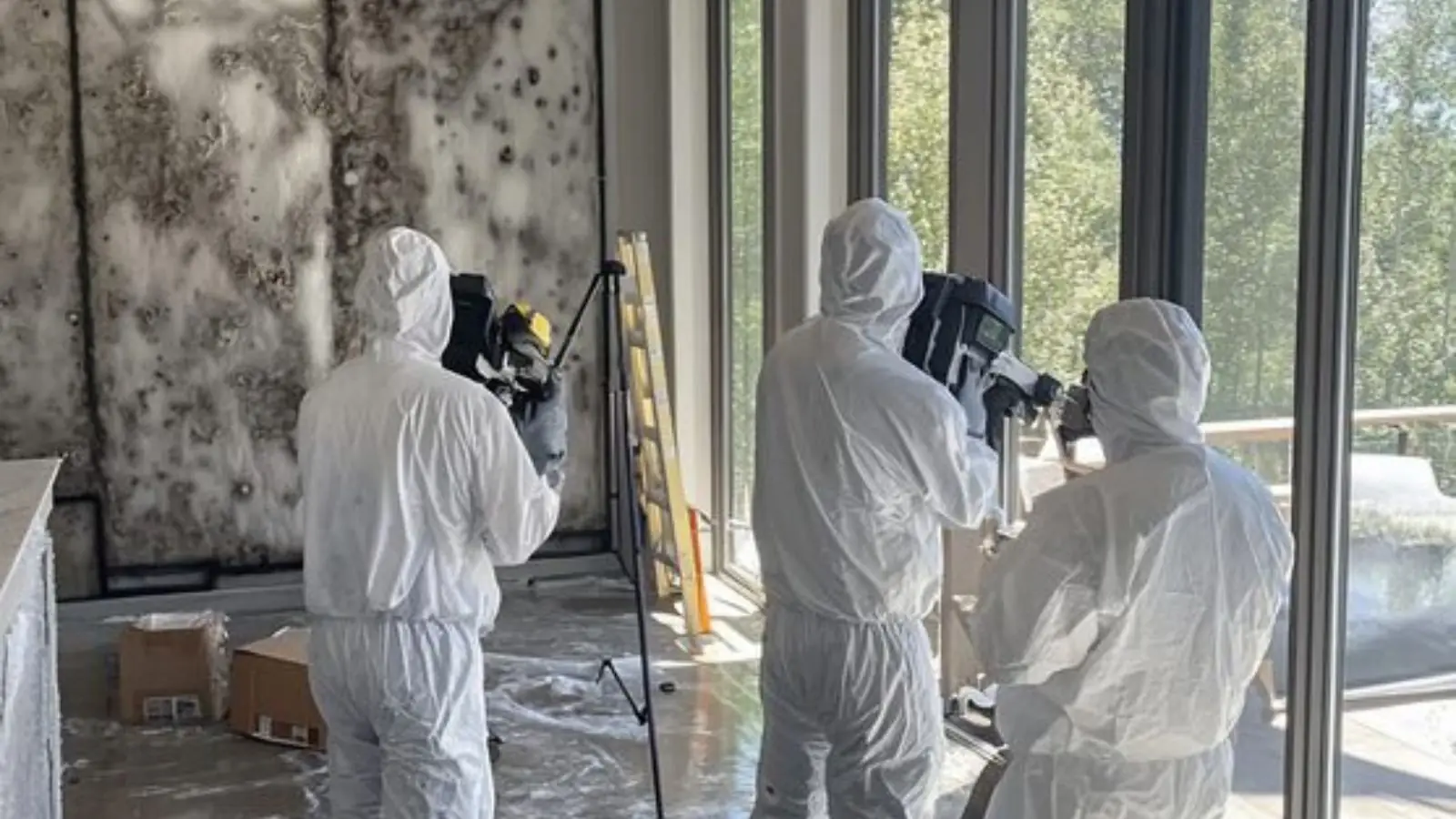
Mold testing and clearance for a home sale or loan in Manhattan Beach, CA means checking a property for visible mold and moisture, removing what is found, and then documenting that the work is finished. Sellers, buyers and lenders use those words a little differently, so it helps to know which step answers which question.
Cleanup work is its own job and is guided by the published S520 standard from ANSI/IICRC, apart from whatever testing a buyer or lender wants. This guide explains inspection, sampling and clearance in plain terms, what the EPA says about each, and which papers are worth keeping when a closing date is close. Our mold remediation page covers the removal side in more detail.
Inspection, sampling and clearance are three different jobs
An inspection is a person looking at the property with a moisture meter and, often, a thermal imaging camera. The goal is to find where moisture is, where it came from, and how much visible growth exists. It answers the question of what is wrong and how big it is.
Sampling means collecting air or surface samples for a lab. It is a separate decision and it does not replace the inspection. Clearance is a final check after cleanup that the area is dry, clean and without visible growth or moldy odor, sometimes backed by sampling.
| Step | What it is | Typical purpose |
|---|---|---|
| Inspection | Walk-through using moisture readings and an infrared camera | Find the moisture source and the affected area |
| Sampling | Air or surface samples sent to a lab | Add data when the situation is unclear or a document is requested |
| Remediation | Containment, removal and cleaning to the S520 standard | Take out mold and damaged porous material |
| Clearance | Final visual check, sometimes with sampling | Confirm the work area is dry and clean before rebuild or closing |
Which of these a particular sale needs is decided by the buyer, the lender or the agent, not by one rule we can point to. Ask for the request in writing so you know exactly which step is being asked for.
What the EPA says about testing
Where growth is plainly visible, federal guidance says lab sampling usually adds little. The same source points out that no federal limit exists for mold or spore counts, so a lab number has no official pass mark to meet. A lab number therefore cannot show compliance with a federal standard, and a report full of spore counts has no federal pass mark to be compared with.
The EPA does say surface sampling may help determine whether an area was adequately cleaned. That is the use closest to clearance. Its benchmark for a finished cleanup is plain: nothing visible and no musty smell left, which is where most written clearance reports begin.
So the practical order is simple. Find and fix the moisture, remove the growth, then decide whether a written clearance check adds anything for the buyer or lender involved.
Not sure what you are looking at?
Call to describe the spot, the leak behind it and the room. An inspection can be scheduled by phone.
Why a lender or buyer may ask for it
A buyer's inspector may note staining or a musty smell in a closet or bathroom. A lender may want to know that a known moisture problem was dealt with before funds move. Neither request is unusual after a leak, and neither means the house is a problem sale.
We cannot say whether a given lender will accept a given report. Lenders set their own conditions, and the person to ask is the loan officer, who can tell you which paperwork closes the item. Raise the question early, because drying and rebuild take days and dates slip when paper arrives late.
Independent clearance testing means an evaluation by a party that did not do the cleanup. Some reviewers like that separation because the evaluator has no stake in the work. It is a choice rather than a requirement we can cite, so ask your agent or loan officer whether it is wanted.
What a clearance-ready cleanup looks like
Reports are only as good as the work behind them. A cleanup that can be documented tends to follow the same five moves.
Stop the moisture
A leak under a sink, a roof drip or a clogged condensation line is repaired first. Wet materials get dried too, ideally inside the first day or two after a leak.
Contain the work area
Plastic sheeting and air filtration keep disturbed material from drifting into clean rooms. The S520 standard describes this kind of containment.
Remove, then clean
Soaked drywall, insulation and carpet pad cannot be cleaned reliably, so they are cut out and bagged. Hard surfaces are cleaned and wiped, because dead mold still has to be removed.
Check dryness and cleanliness
Moisture meters confirm the framing has returned to normal readings. A visual walk-through looks for remaining growth and odor.
Write it down
The scope, dates, photos and readings go into one file you can hand to the buyer, agent or lender.
Papers worth keeping for the sale file
Buyers and lenders read documents, not intentions. Four items cover most requests.
Moisture readings
Dated meter readings before and after drying show that the structure was brought back to normal levels.
Scope of work
A written list of what was removed and cleaned, and where, so the next reader is not guessing.
Photos
Date-stamped images of the affected area before, during and after removal.
Source repair record
The plumber's or roofer's invoice that shows the leak itself was fixed. Without it, a clean report looks unfinished.
Keep all of it in one folder. With a claim open, keep a running record of every call and letter, and let the adjuster release damaged items before anything is thrown out, per California's insurance regulator.
After clearance comes the rebuild
Cleanup often leaves open walls or a missing ceiling section. Rebuild means new drywall, insulation, paint and trim, which is the territory of water damage repair. Sellers usually want that finished before listing photos are taken, so plan the rebuild alongside the cleanup instead of after it.
Permit needs vary by city. Under the state building standards code, altering or repairing a structure generally needs a permit from the local building official, though each city sets its own requirements. Ask the local building department what applies to your rebuild.
What slows a sale timeline
The most common delay comes from a leak source nobody has traced. A stained closet ceiling may trace to a toilet upstairs, and the cleanup stalls until that fixture is repaired.
A second delay is waiting for materials to dry. Drying is measured in days, and rushing it to meet a closing date tends to leave damp framing behind new drywall. Sellers near Redondo Beach or El Segundo who are comparing timelines can read how crews work in Redondo Beach and El Segundo, where the same drying rules apply.
Manhattan Beach notes for sellers
In Manhattan Beach the permits desk sits inside Community Development on Highland Avenue, and its phone number is on the city's appointment page. If your cleanup leads to a rebuild, that desk is where to ask what applies at your address. We do not list permit rules here because they vary and the city is the authority.
Sellers also field hazard questions, and the city Fire Department's emergency plans page shows a tsunami inundation area map and a hazard plan that names floods among local risks. Find your address on FEMA's flood map, since flood coverage is a separate insurance matter from a leaking pipe.
NOAA's 1991 to 2020 normals give LAX 12.23 inches across a July to June rain year, which is modest but enough to test a roof and its flashing. With rain that modest, plumbing, roof and condensation leaks deserve as much attention as storms when a buyer asks where moisture came from.
Questions about mold testing and clearance for a home sale in manhattan beach
Does Manhattan Beach require mold testing before a sale?
We have not found a city rule that requires it, and this page cannot confirm one either way. Ask your listing agent and the Community Development permits desk what applies to your address.
Do I need sampling if the mold is visible?
The EPA says that in most cases sampling is unnecessary when visible mold growth is present. Sampling can still be requested by a buyer or lender, so ask what they want before paying for it.
Who should do the clearance check?
Some reviewers prefer an evaluator who did not perform the cleanup, so the check is independent. That is a preference, not a rule we can cite, and your agent or loan officer can tell you whether it is wanted.
Will a lender accept my clearance report?
We cannot promise that. Each lender sets its own conditions, so send the report to the loan officer early and ask whether it closes the item.
How long should I wait after cleanup before listing?
Wait until moisture readings are back to normal and the rebuild is finished. Drying usually takes days, not hours, so build that into the calendar.