
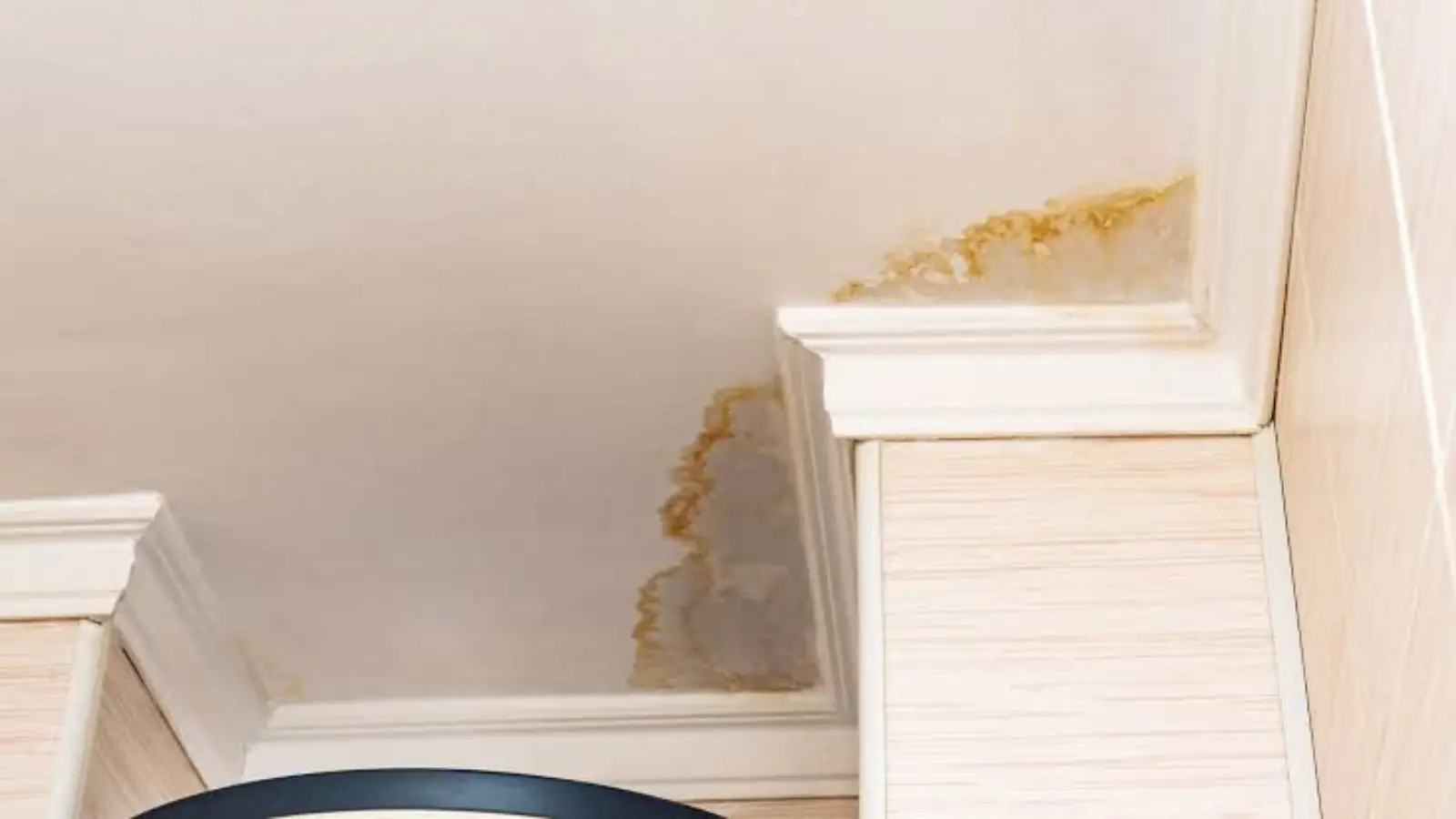
Minor ceiling water damage is a small, dry stain with no sag, no soft drywall and no active drip. Anything beyond that, such as bubbling paint, a bulge or dampness you can feel, is moving toward serious. The trouble is that a ceiling shows only the last stop of the water's path.
In Manhattan Beach, where many homes are two stories with bathrooms above living rooms, a stain can come from a plumbing line, the roof, an attic duct or an air conditioner condensate line. This guide helps you read what you see and decide whether a quick patch or a proper assessment is the right call.
What minor really means
Minor does not describe size. A faint ring the width of a dinner plate is minor only if the paper face of the drywall is intact, the surface is bone dry and the stain has not grown since you first noticed it.
Mark the edge of the stain lightly in pencil and check it the next day. If the line moves, water is still arriving, and the ceiling is no longer a cosmetic problem.
Size still matters in one way. A stain that reaches a light fixture, a vent or a wall corner suggests water has traveled along framing, and tracing it takes more than a patch. Photograph the whole ceiling, not only the stain, so you can compare later and show an adjuster the full picture if you file a claim.
Stain, sag or hole: a decision table
Use the table to match what you see with the usual next step. The right-hand column is a starting point, not a diagnosis.
| What you see | What it usually means | Next step |
|---|---|---|
| Dry tan or brown ring, flat surface | An old, finished leak | Find the source, confirm dryness with a moisture meter, then prime and paint |
| Ring that grows or darkens | Moisture still arriving | Stop the source first, then dry the area |
| Bubbling or peeling paint | Water trapped behind the paint film | Check the drywall behind it for softness before any painting |
| Sag, bulge or soft spot | Saturated drywall, possibly insulation above | Treat as urgent, relieve the water and keep people out from under it |
| Hole, crumbling or open seam | Failed drywall | Call for assessment, do not just patch |
A sag is the point where waiting becomes risky. Wet drywall is heavy, and a bulging panel can drop without warning.
Want the damage looked at in person?
Call to schedule an inspection of the ceiling, wall or floor before anything is cut out.
Where the water usually comes from
Work backward from the stain. A ring directly under a bathroom suggests a supply line, drain or toilet seal. A stain on a top floor ceiling after rain points toward the roof or flashing, and a stain along a line often follows an attic duct or a plumbing run.
Air conditioner condensate lines are a common surprise. When the pan or drain line backs up, water can spill into the ceiling cavity and show up as a stain far from the equipment.
Checks you can do safely
Start with the room above. Look under sinks, around the tub and at the base of the toilet for dampness, and run the fixtures while someone watches the ceiling below. If the stain only appears after rain, the roof deserves a look from a licensed roofer. Check the attic access too, if you have one, using a flashlight and staying on the joists.
Press test
Press gently with a gloved hand. A cold, soft or cool-to-the-touch spot means moisture is still present.
Photo log
Take a photo each morning with a ruler or coin in frame to track growth.
Smell check
A musty smell suggests the water has been there long enough to affect insulation or framing.
Stay out from under it
If the ceiling bulges, move furniture and people away and do not poke it from below.
Never touch a ceiling fixture or switch if water is dripping near it. If it reaches a light or outlet, treat it as an electrical risk, shut the circuit off only if the panel is dry and safe to reach, and call 911 or the utility for any electrical or gas concern before you call us.
When a patch is enough and when it is not
A patch is reasonable after the leak is repaired and a moisture meter confirms the drywall has dried. Primer with a stain-blocking formula goes on before paint, since ordinary paint will let the ring bleed through.
Insulation above a wet ceiling can stay soaked long after the surface feels dry. Our team checks that cavity as part of water damage repair before the ceiling is closed, since sealing in damp material invites mold.
Drying before repair
Drying comes first and repair second. A ceiling cavity seldom dries quickly without help, so fans and a dehumidifier usually need to run for days before anyone patches or paints.
For a damp ceiling, water mitigation may mean cutting a small inspection opening, placing an air mover to push dry air through the cavity, and checking readings again in a day or two. Scope and price are explained before the work starts.
Why a quick paint-over backfires
Painting over a damp stain locks moisture in and hides the evidence. Months later the paint bubbles, the ring returns and the drywall below has deteriorated.
If you are selling or renting, a visible repair with a documented dry reading is easier to explain than a fresh coat of paint over an unknown. Keep the readings and photos with your home records.
Manhattan Beach and the ceiling question
According to the National Oceanic and Atmospheric Administration's 1991-2020 normals, as published for the airport station at LAX, the nearest long record, the seasonal precipitation normal there is 12.23 inches. That is modest, which means a stain that appears in a dry stretch is more likely plumbing or condensate than rain, while one that shows up right after a storm points toward the roof.
For any repair that involves cutting out ceiling structure or framing, permit rules vary by city. Ask the Manhattan Beach Community Development Department, which handles permits at 1400 Highland Avenue, before you commit to larger work.
The same reading applies in nearby towns, from Hermosa Beach to Hawthorne, where two-story homes with upstairs bathrooms put plumbing directly over living space. If the stain sits under a bathroom, start with the fixtures above it.
Questions about minor ceiling water damage for manhattan beach homes
Can I just paint over a ceiling stain in Manhattan Beach?
Only after the source is fixed and the drywall reads dry on a moisture meter. Use a stain-blocking primer first. Painting damp drywall hides the problem and often fails within months.
How do I know whether the leak is still active?
Mark the edge of the stain in pencil and recheck it each day, and also look for a cool or soft spot. A growing ring or a drip during or after fixture use means water is still arriving.
Is a sagging ceiling an emergency?
Treat it as urgent. Saturated drywall is heavy and can fall. Keep people out from underneath and call for help to relieve the water safely.
Could a stain near the beach come from the air conditioner?
Yes. Condensate lines and drip pans can overflow into a ceiling cavity. If the stain tracks along a duct run, the cooling system is a good suspect.
Do I need a permit to fix a ceiling in Hermosa Beach or Hawthorne?
Requirements differ between cities and depend on how much work is involved. Confirm with your city's permit office before cutting into any framing.