
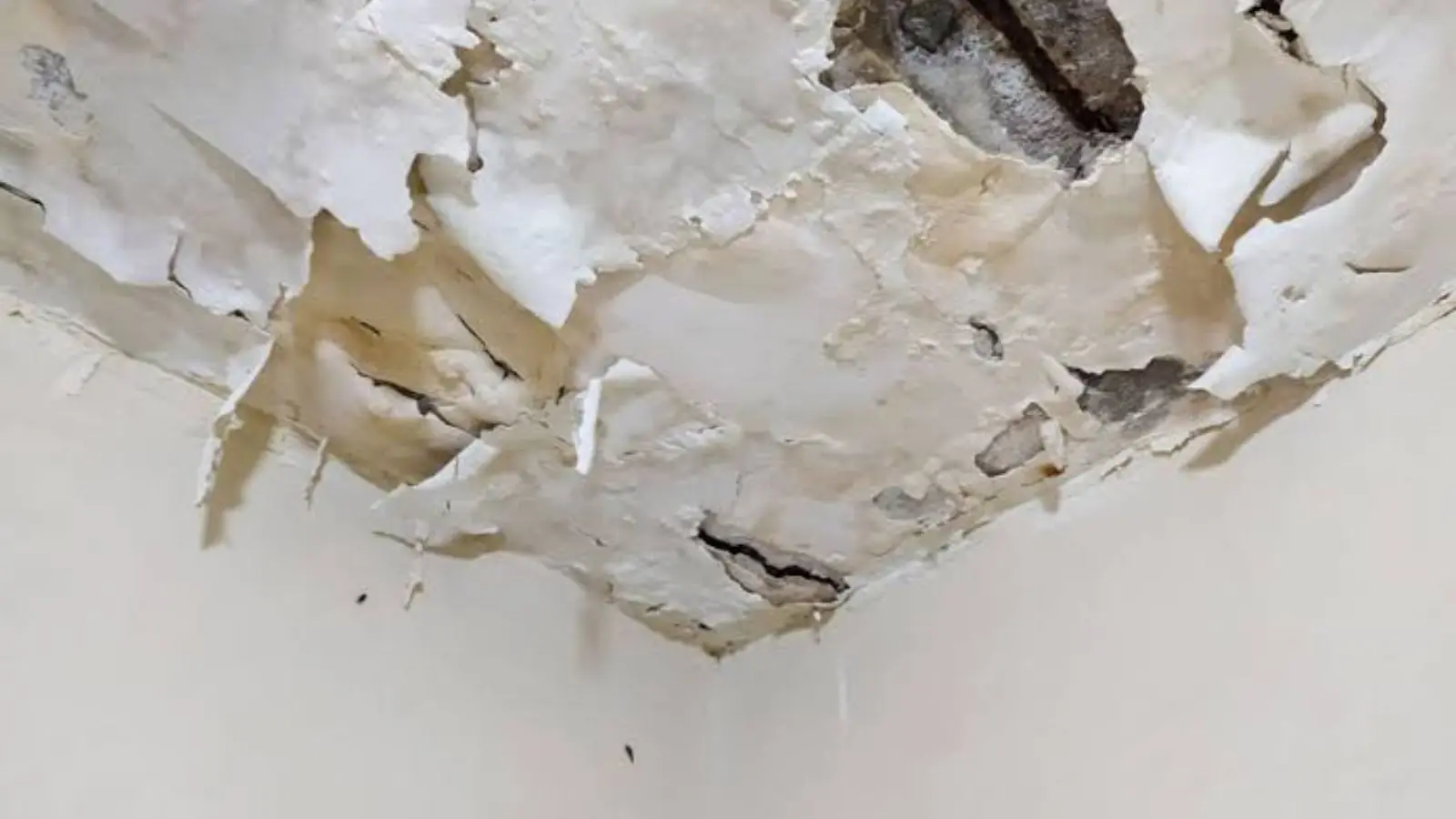
Fixing a water-damaged ceiling in Manhattan Beach, CA follows a fixed order: find and stop the leak, dry everything out, cut away soaked or sagging drywall, patch, seal the stain and finish with paint. Skip ahead and the brown ring tends to return within a season.
The same steps cover searches like water damage on ceiling repair and repair ceiling water damage. They also show where a do-it-yourself job ends, because a ceiling is overhead, near wiring and often hiding insulation that has soaked up more water than the stain suggests.
Start above the ceiling, not on it
The stain is rarely where the leak is. Water follows joists and pipes before it drips, so trace the wet spot upward. Check the bathroom above, the roof directly over it, the air conditioner condensate line and any supply lines running through the joist bay.
If the ceiling is actively dripping, put a bucket underneath and poke a small drain hole at the lowest point of a bulge, which relieves weight before the sheet collapses. Keep your face out from under it when you do.
Shut off the water to the suspected source. A plumber or roofer fixes the cause, and until that is done every other step is temporary.
Safety first: electricity and weight
Water and wiring share the ceiling cavity. If a light fixture, fan or outlet box is wet, turn off the breaker for that circuit, and call an electrician if you see sparks or smell burning. For any electrical or gas risk, call 911 or the utility before the restoration line.
Wet drywall and insulation are heavy. A sagging panel can drop a lot of weight at once, so wear eye protection, a dust mask and a hard hat if you are cutting overhead.
Want the damage looked at in person?
Call to schedule an inspection of the ceiling, wall or floor before anything is cut out.
Dry the cavity before you patch
Give the area airflow. Cut a tidy rectangle around the stain, pull out any damp insulation and run a fan and dehumidifier until the joists feel dry. Rushing to patch over moisture is how mold gets started.
A moisture meter tells the truth that your fingers cannot. Wood joists should read close to your other dry wood before closing anything up. Crews providing water mitigation use meters and thermal imaging for exactly this reason.
Cut, replace and tape the drywall
Cut back to the middle of the nearest joists so the new piece has something to screw into. Replace with drywall of the same thickness, fasten it, and cover the seams with paper or mesh tape and joint compound.
Apply two thin coats of compound with a wider knife each time, sand lightly between coats, and wipe the dust. Thin coats dry faster and show fewer ridges than one thick one.
Mark and cut
Outline a square or rectangle past the stain. Score with a utility knife and cut with a drywall saw.
Pull wet material
Remove drywall, wet insulation and any loose texture. Bag it right away.
Fit the patch
Add backing strips if no joist is nearby, then screw the new drywall in place.
Tape and mud
Tape the seams and apply joint compound in thin coats.
Match the texture
Spray or stipple texture to match the surrounding ceiling before sealing.
Seal the stain and paint
A stain-blocking primer is not optional. Ordinary paint lets tannins and mineral deposits bleed through, so use an oil- or shellac-based blocker, or a product rated for water stains.
Paint the entire ceiling plane, edge to edge, when you can. Painting only the patch usually leaves a visible patch.
Common mistakes that bring the stain back
Patching before the cavity is dry is the leading one, followed closely by skipping the stain blocker and painting only the patch. A third is leaving wet insulation in place because it looks fine from below.
Another is using joint compound in one thick pass, which cracks as it dries. Thin coats with sanding between them take longer on the clock and far less time in rework.
If you are unsure about any of these steps, a short inspection saves a lot of guessing. The call line on this page can arrange one.
When to stop and call a crew
Some jobs are bigger than a patch. The table shows signs that point to professional help rather than a weekend project.
If the ceiling is large, soaked through or tied to a plumbing failure, the water damage repair team handles drying, removal and rebuilding together.
| What you see | What it suggests |
|---|---|
| Stain smaller than a dinner plate, no sag, dry now | A small, old leak that DIY patching can address |
| Sag, bubble or dripping | Water trapped above, and a risk of collapse |
| Several rooms or the whole ceiling stained | A large loss that needs drying equipment and inspection |
| Musty smell, visible dark growth | Moisture has lingered, and mold may be involved |
| Water from a bathroom, toilet or drain above | Possible contamination, and the materials should come out |
Repair versus insurance paperwork
Take photos before any cutting begins. Hold on to receipts for temporary fixes, and wait on major permanent work until your insurer has had a chance to inspect.
Policies usually treat a sudden burst differently from a slow seep or neglected maintenance. Read your policy or phone your insurer before the work starts.
Local note for Redondo Beach and El Segundo
The City of Redondo Beach shares its water with Hermosa Beach through Cal Water's Hermosa-Redondo system, which draws on local groundwater from two wells plus purchased Metropolitan Water District supply, according to Cal Water's own report. Golden State Water also serves portions of Redondo Beach, based on its published fact sheet. Check your bill to see which applies when you report a line leak. Our Redondo Beach page lists local ZIP codes.
El Segundo's Public Works page says the department maintains about 65 miles of water lines and about 60 miles of sewer lines. If a ceiling leak starts with a water main issue or street-level problem, those public lines are the starting point for a report. See the El Segundo service page for details.
Rain is a seasonal factor on roof leaks. NOAA's 1991-2020 normal seasonal precipitation at LAX is 12.23 inches, which is the nearest long record. Most roof leaks show up after a rain, so check your attic or roof after storms.
Questions about how to repair ceiling water damage in manhattan beach
Can I just paint over a water stain?
You can, but it will likely show again. Primer made for stains is the minimum, and the stain only stays gone if the source is fixed and the area is dry.
If the ceiling is soft or sagging, painting hides a bigger problem.
How long should I wait before patching?
Wait until moisture readings match dry areas, which can take days. Patching earlier traps moisture behind new drywall.
A meter beats a calendar.
Is a bubble in the ceiling an emergency?
Treat it as one. A bubble is water held in the paint or board and can release suddenly.
Puncture a small drain hole with a bucket below and stay out from under it.
Do I need a permit to repair a ceiling in Redondo Beach or El Segundo?
Requirements vary by city and by scope. Small patches often differ from structural or electrical work.
Ask your city building department before you start.
What if the ceiling has a textured or popcorn finish?
Texture matching is the hard part of the job. Spray texture, knockdown and popcorn finishes each need their own technique.
Older textured ceilings may need testing before disturbance, so ask before sanding or scraping.