
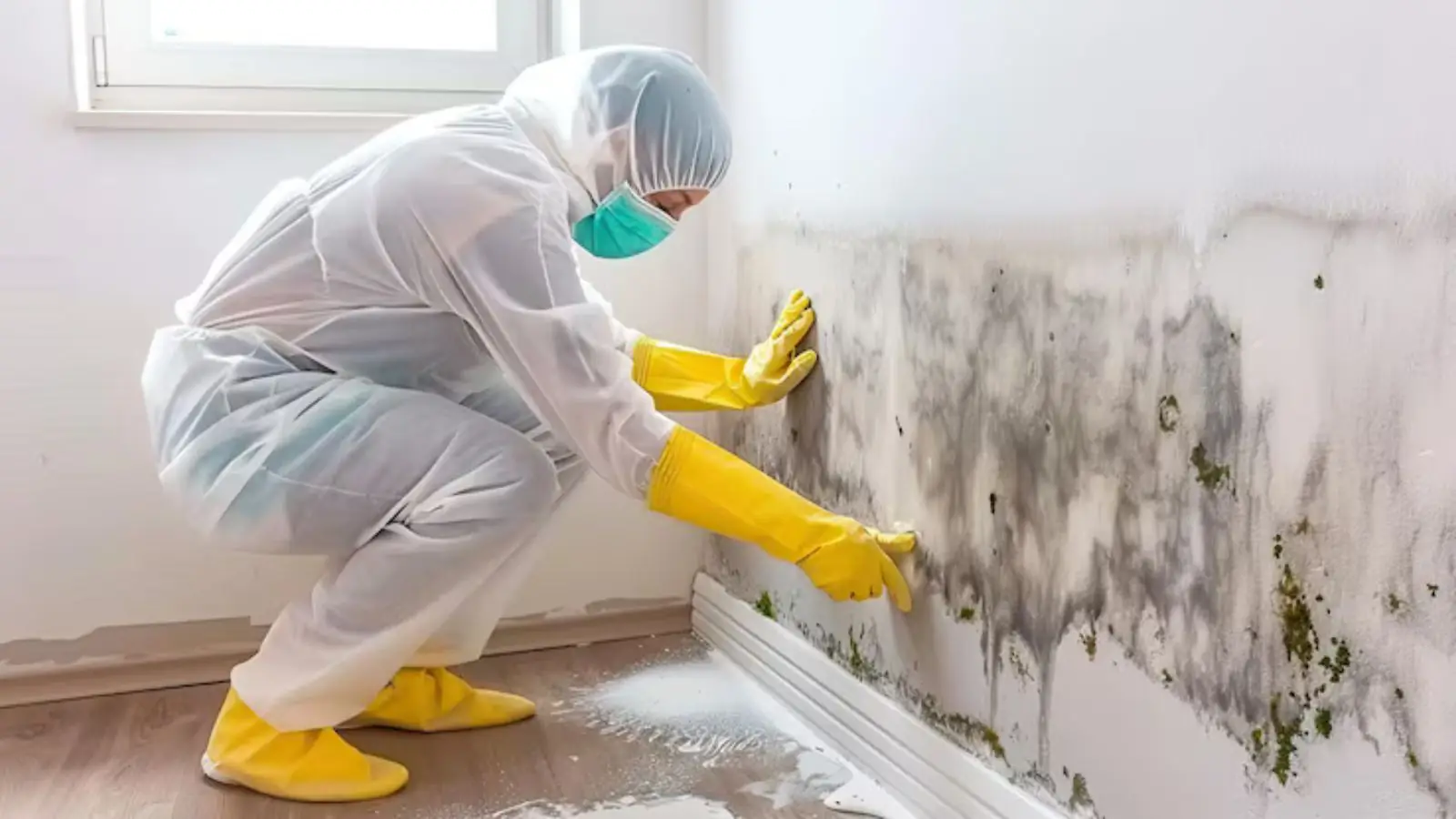
Removing mold from a basement in Manhattan Beach, CA works best as a sequence: stop the water, protect yourself, remove what cannot be cleaned, clean what can, and dry everything. Skipping the first step is the usual reason mold returns within weeks.
This guide is for small, surface-level patches in a basement or any below-grade room. It also draws a firm line around the jobs that need containment and trained crews, so you can decide before you open a single bag of supplies.
Step one is the water, not the mold
Every cleanup guide from the EPA leans on one idea, which is moisture control. Scrubbing a wall that is still damp from a leak is effort spent on a surface that will simply grow it back.
Walk the space with a flashlight. Look at the underside of pipes, the base of the water heater, the washer connections, the sill plate and any crack where seepage shows up as a dark line or a white mineral crust. Fix the source or have the right trade fix it before cleanup begins.
If the room took on real water, start with drying. A crew providing flood damage restoration will extract the water and set air movers and dehumidifiers so the structure dries evenly.
Decide quickly whether this is a DIY job
Roughly 10 square feet is where the EPA draws its line for household cleanup. A smaller patch is often manageable by the people who live there, while a bigger one, or any case with heavy water damage, calls for professional guidance.
Use the table as a quick sort. If you land in the right-hand column on even one row, treat the job as professional work.
| Situation | Reasonable approach |
|---|---|
| Smaller than a doormat-sized patch on a hard surface, water source fixed | Household cleanup with protective gear and ventilation |
| Mold on drywall, carpet or insulation | Remove the porous material, which usually means cutting and bagging it |
| More than about 10 square feet, or mold in several rooms | Professional mold remediation with containment |
| Water came from sewage or a drain backup | Stay out, call a restoration crew and treat the water as contaminated |
| You cannot find the moisture source | Inspection first, cleanup second |
Not sure what you are looking at?
Call to describe the spot, the leak behind it and the room. An inspection can be scheduled by phone.
Gear and ground rules before you start
Wear an N95-style respirator or better, non-porous gloves and goggles without vent holes. Old clothing you can bag and wash separately keeps residue out of the rest of the house.
Keep the work area closed off. Shut interior doors, cover vents with plastic and run a fan that exhausts to the outside from a window, not into the house.
Never mix cleaning products. Bleach combined with ammonia or acidic cleaners releases dangerous gases, so use one product at a time and rinse between them.
Remove what cannot be cleaned
Porous materials hold moisture inside, so surface wiping does not solve them. Wet or moldy drywall, ceiling tile, insulation, carpet and padding are typically cut out, double bagged and carried straight out of the house.
Cut slightly past the visible edge and look at the back side of what you remove. If the stud behind a wet panel is also dark, you have found the larger problem and the likely edge of your job.
Do not sweep dry. Mist surfaces lightly so dust stays down, and wrap debris before moving it through living space.
Clean hard surfaces and dry them thoroughly
For solid surfaces such as concrete, block and framing lumber, scrub with detergent and water, then wipe with clean water. The EPA stresses that mold should be removed, not just killed, so scrubbing and rinsing beat spraying and walking away.
Get the space dry inside a day or two, which the EPA puts at 24-48 hours for water-damaged items. Then hold indoor humidity under 60 percent, ideally closer to 30 to 50 percent. A dehumidifier and a cheap hygrometer make the number visible.
When the job is done, neither visible growth nor a moldy smell should remain. If one returns, moisture is still getting in somewhere.
Signs the job has outgrown a bucket and a brush
Call a crew when the patch is large, when it has returned after a previous cleaning, or when the smell stays after you finish. A hidden cavity behind paneling or under flooring is another reason to stop and have the space opened up properly.
Standing water that came from outside, a drain backup or a burst line also changes the picture. Our mold remediation page explains how containment, air filtration and clearance checks fit together under ANSI/IICRC S520, the published standard for this work. Health questions about exposure belong with a physician, not with a restoration company.
After cleanup: keep it dry
Run a dehumidifier in the space through the wet months, keep stored items off the floor on shelving, and check pipe insulation and washer hoses twice a year. Small habits like these cost little compared with a second cleanup.
Take photos of the work as you go and save every receipt. If an insured event caused the damage, your insurer will want that trail, so ask what format it prefers.
Local note for El Segundo and Hawthorne readers
In El Segundo, the Public Works department runs the water system, along with sewer and storm drains, according to the city's own page. The page cites roughly 65 miles of water pipe and 60 miles of sewer. If a below-grade problem traces to a street-side line, that department is who to ask. The El Segundo service page covers how crews respond.
Water service in Hawthorne changed hands recently. Cal Water's alert says its operation and billing ended on August 31, 2026, and the city has handled water since September 2026. For a billing or main-line question, call the city first. More local detail sits on the Hawthorne page.
Neither source says anything about mold in particular, so use them for routing questions, not for diagnosing your basement. For permit questions on repairs, ask your city building department.
Questions about how to remove mold from a basement in manhattan beach
Can I kill basement mold with bleach alone?
Bleach does not fix the moisture and does not penetrate porous materials. Removal and drying matter more than any single product.
If you do use a cleaner, use only one at a time and ventilate well.
How do I know if the leftover smell means mold is still active?
A moldy odor after cleanup suggests moisture or hidden growth remains. Check for damp insulation, wet corners behind stored items and condensation on cold pipes.
If the smell holds for a week after drying, call for an inspection.
Is it safe to remove mold if someone in the house has health concerns?
We do not give health advice. A physician is the right person to ask about exposure in your household.
A professional crew can handle the physical cleanup so you avoid disturbing it yourself.
Does a sewage backup count as a mold job?
No, it is a contaminated water job first. Stay out of the affected area and call a restoration crew.
Mold, if present, is handled after the contaminated materials are removed and the space is cleaned.
What if my El Segundo or Hawthorne home is in an old building with a shared basement?
Shared spaces add coordination with a landlord or association, and the source may be outside your unit.
Document what you see and ask the manager to authorize an inspection before cleanup starts.