
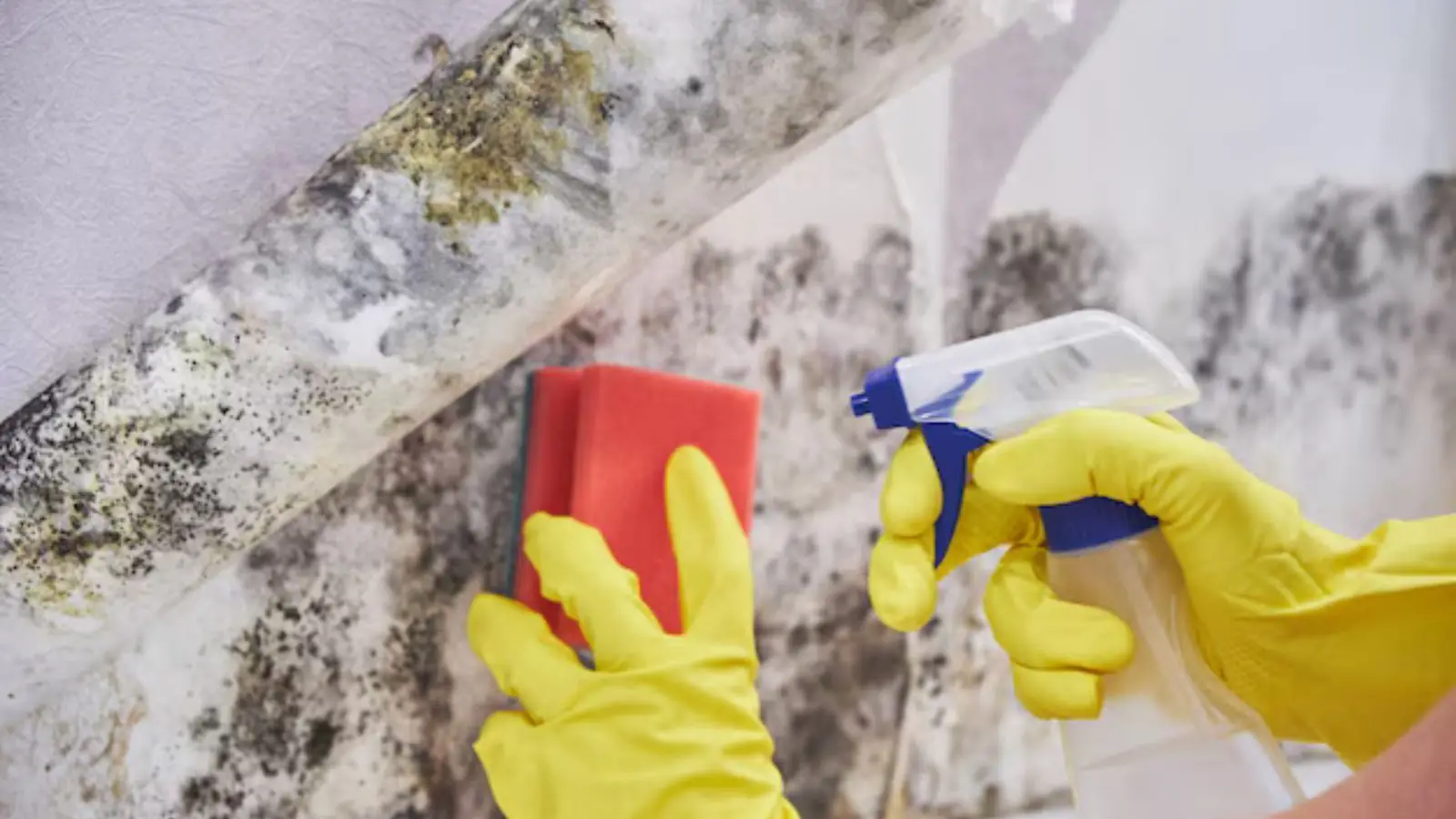
To kill mold in a Manhattan Beach, CA home, the sequence that works is dry the area, remove the growth, and keep humidity down. A product that only kills mold leaves dead growth behind, and the EPA says that is not enough.
This post is organized as myths first, then humidity, then a material-by-material guide. If you want help beyond what a household can do, the water damage cleanup page and the mold remediation page explain how crews handle each stage.
Three myths worth dropping
Myth one says a strong spray ends the problem. In truth, dead mold still has to be removed, because what remains on a surface is still mold material. Wiping and scrubbing do more than any liquid left to sit.
Myth two says a stained wall means active mold. Staining can remain after growth is cleaned, and the EPA notes mold may leave staining that cannot always be removed. Myth three says moldy odor can be masked. If an odor is present after cleanup, something wet is still hidden.
Humidity is the lever
Moisture is the lever for mold control. Keeping indoor humidity under 60 percent is the EPA's line, and a 30 to 50 percent range is what it calls ideal. A cheap hygrometer from a hardware store gives you the number.
Run bathroom fans during and after showers, vent dryers outdoors, and fix condensation at its source. Speed after a spill counts as well, because drying inside a day or two generally keeps growth from starting.
Not sure what you are looking at?
Call to describe the spot, the leak behind it and the room. An inspection can be scheduled by phone.
Hard surfaces versus porous materials
What you can clean depends on what the mold is sitting on. Use this guide before you reach for a sponge.
| Material | Approach | Why |
|---|---|---|
| Tile and glazed surfaces | Detergent and water, scrub, rinse, dry | Smooth surfaces release growth when scrubbed |
| Sealed wood trim | Wipe with a damp cloth, scrub lightly, dry | Sealed finishes resist soaking |
| Raw wood framing | Assessment first, may need professional cleaning | Wood holds moisture and growth inside the grain |
| Drywall | Remove affected sections | Paper and gypsum absorb and hold growth |
| Insulation and carpet pad | Remove and bag | Porous and hard to clean |
| Fabric and upholstery | Case by case, some items cannot be saved | Fibers hold residue |
A cautious cleaning sequence for small hard-surface areas
Small patches under about 10 square feet are within reach of many households, says the EPA. Anything larger, or any porous material involved, moves toward professional work following the ANSI/IICRC S520 standard.
Find the water
Look under sinks, behind toilets, at window corners and along ceiling lines for the leak or condensation feeding the growth.
Prepare the space
Wear gloves and eye protection, ventilate, and do not mix cleaning products.
Wipe and scrub
Use detergent and water on hard surfaces, working from clean to dirty areas and bagging cloths after use.
Dry fully
Run a fan and dehumidifier until the surface is dry to touch and the air is in the 30 to 50 percent range.
Recheck in a few days
Look for returning growth and odor. If either shows up, stop and have the area assessed.
Common mistakes with household products
The most frequent mistake is treating a surface and ignoring the cause. A bottle of cleaner works on the top layer and leaves the leak, the damp insulation or the wet framing untouched. Growth returns in weeks, and the room smells the same.
A second mistake is overwetting. Soaking drywall or wood with liquid adds moisture to materials that are already struggling to dry. Use a damp cloth, not a saturated one, and dry the area right away.
A third mistake is skipping protection. Basic gear means gloves, goggles and a snug mask, and blending cleaning products can create hazards of its own. Read labels and keep to one product at a time.
When to stop and call
Some signs mean the problem is bigger than a surface wipe. These are the ones that matter most.
Growth keeps returning
That points to a moisture source you have not found.
Soft or crumbling material
Drywall or wood that gives under pressure is wet inside and needs removal.
More than 10 square feet
The EPA threshold for household cleanup has been passed.
Recent flood or sewage
Contaminated water makes cleanup a water damage cleanup question before it is a mold question.
Health questions about living with mold belong to a physician. A restoration crew handles the building, not the person.
How humidity gets out of hand
Humidity rises from ordinary life. Showers, cooking, laundry and drying clothes indoors all add water vapor, and a tightly closed house keeps it inside. When the air stays above the EPA's 60 percent ceiling, cool surfaces such as exterior walls, window frames and closet backs collect condensation.
The fix is steady. Use exhaust fans while bathing and cooking, vent clothes dryers outside, leave closet doors slightly open, and add a dehumidifier in rooms that stay damp. Check the hygrometer weekly, because habits and seasons change the reading.
Helping a neighbor or a nearby rental
Mold is a building problem, so the approach does not change with the address. Homeowners in Hermosa Beach and Lawndale who are managing moisture in older closets, garages and bathrooms use the same order: source, dry, remove, monitor.
Take the same approach with stored items. Cardboard boxes, books and fabric left against a damp wall absorb moisture and hold growth, so move them to a dry spot, sort what can be cleaned from what should go, and give the wall time to dry before anything goes back.
Local numbers behind the advice
NOAA's 1991-2020 normals list seasonal precipitation at LAX at 12.23 inches for the July-to-June season, and the average across 1944 to 2026 is 11.90 inches. Because rain is limited, most indoor moisture in Manhattan Beach homes comes from plumbing, roofs, showers and condensation, which is why humidity control is the practical focus.
On the water side, a city Public Works memo places Manhattan Beach in Division III of the West Basin district. Water supply is not the issue for mold, but water bills can reveal a hidden leak, and the city is the first place to call if usage looks wrong.
Before opening a wall or ceiling, check permit rules with the city's Community Development office on Highland Avenue. We do not state permit rules because they vary.
Questions about how to kill mold in manhattan beach: why removal matters more
What kills mold fastest?
Fast and permanent are different goals. Drying is fastest at stopping growth, and removal of the growth is what finishes the job, since the EPA says dead mold must still be removed.
Does a dehumidifier kill mold?
A dehumidifier lowers humidity, which stops mold from spreading. It does not remove growth that is already on a surface.
Is vinegar a good option?
Vinegar is a common household choice for hard surfaces, but wiping and drying do most of the work, and it is not a substitute for repairing the leak.
Can I paint over a moldy wall once it looks clean?
Only after the moisture is repaired, the surface is clean and the wall is dry. Painting over growth hides the problem and does not remove it.
When is cleanup beyond what a household should do?
Past that size, or once drywall, insulation or carpet is affected, bring in a crew that works to S520.