
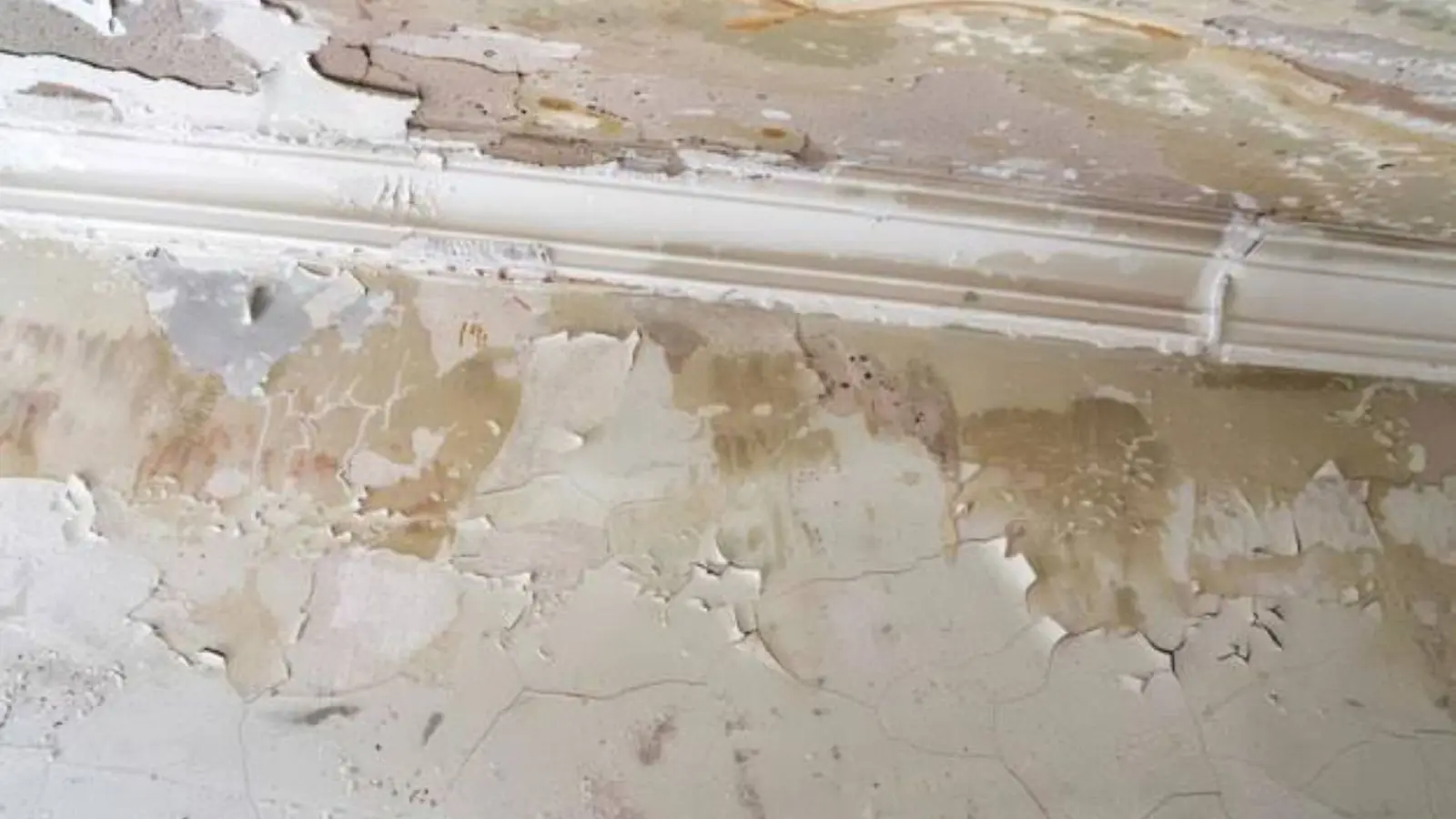
Drywall water damage repair starts with a question that sounds simple: is this panel wet all the way through, or only on the surface? The answer decides whether the wall can be dried in place or has to be cut out and replaced.
Gypsum board is a paper-faced sandwich. It tolerates a brief splash, but once water wicks into the core it softens, loses strength and becomes a food source for mold. This guide covers how a wall is assessed, where a flood cut is placed, what happens to insulation and how the finish is built back so the repair disappears.
How wet drywall is assessed
Eyes and fingers help, but tools settle the argument. A pin or pinless moisture meter gives a reading at several heights on the wall, and a thermal imaging camera shows cool, damp zones that look normal to the eye.
We map the readings on a sketch of the room and compare them to a dry reference wall in the same house. That map becomes the scope of work, and it is also a record you can hand to your insurer.
Replace or dry in place
Not every wet wall has to be demolished. The table shows the usual decision logic when the water was clean and the exposure was short.
Contaminated water, such as sewage or floodwater carrying soil, changes the answer. Porous materials that touched it are removed instead of dried.
| Condition | Usual call | Why |
|---|---|---|
| Clean water, short exposure, firm board | Dry in place | The core has not collapsed and drying equipment can pull the moisture out |
| Soft, crumbling or swollen board | Replace | Strength is gone and paper face has delaminated |
| Sewage or floodwater contact | Remove and replace | Porous material is not cleaned in place |
| Water trapped behind vinyl or tile | Open and assess | Moisture cannot escape, so readings behind the finish matter |
| Visible mold growth | Contain, remove, replace | Removal follows the published ANSI/IICRC S520 standard |
Ask a contractor which standards guide its water and mold work, such as ANSI/IICRC S500 and S520. They are trade references, and a website cannot hand out compliance on a company's behalf.
Want the damage looked at in person?
Call to schedule an inspection of the ceiling, wall or floor before anything is cut out.
Where the flood cut goes
A flood cut is a straight horizontal cut across the wall that removes the wet lower section and leaves the dry upper part in place. The cut is made above the highest visible stain or reading, with a margin so wicking is not left behind.
Wicking is the reason walls look dry above the stain line but still read wet. Water climbs through paper and gypsum in a way that makes the damage taller than it appears.
Insulation, studs and the cavity
Behind most walls sit fiberglass batts or similar insulation. Wet insulation loses its value and holds moisture against the studs, so it is usually removed and replaced even when the drywall could have been saved.
Wood studs and bottom plates are measured too. Framing often dries well with air movers and a low-grain refrigerant or LGR dehumidifier, and it should read dry before the wall is closed. Closing up a damp cavity is how a small repair turns into a mold job.
Stop the source
Repair the leak or shut off the supply before any other work begins.
Map moisture
Record readings at several heights and note where they fall to normal.
Cut and remove
Take out wet board and insulation along the planned line.
Dry the cavity
Run air movers and dehumidification until studs and plates read dry.
Close and finish
Hang new board, tape, mud, prime and paint.
Priming, texture and paint
A repair looks bad when the finish is skipped. Seams are taped and coated in thin layers so the edge stays flat, then sanded and primed with a sealing primer before paint.
Matching an existing texture takes patience. Many Manhattan Beach interiors use a smooth or light orange-peel finish, but a texture sample held up to the wall is the only reliable way to match it. Our water damage repair work includes that finish step so you are not left with bare joint compound.
Paint last. Two coats over primer hide the seam, and the color should be matched against the cured wall, since old paint fades.
Dry first, rebuild second
Building back over damp framing is the most frequent error. Drying has to start the moment the source is shut off, well before any new board goes up, because trapped moisture shows up later as stains, soft spots and odor.
That first phase belongs to water mitigation, where crews place equipment, log readings and clear the walls for rebuilding only once they test dry. Scope and price get explained before any work begins.
Closing the loop on cost
Drywall repair cost depends on how much board is affected, the water category, how many days of drying equipment are needed and how much paint and texture work follows. We do not quote numbers in a blog because every wall is different, and we explain scope and price after an assessment of your property.
Larger jobs cost more mainly because of the drying days and the finish work, not because the board itself is expensive. A single wet panel near a tub can be a one-visit repair, while a wall that wicked water up a full story is a different project.
What local sources say for El Segundo and Redondo Beach neighbors
Many readers near the Sepulveda corridor live in El Segundo or Redondo Beach. According to the El Segundo city page for Public Works, the city runs about 65 miles of water lines, about 60 miles of sewer lines and about 18 miles of storm drains. A wet wall may trace back to a private line even though the city system is large.
The El Segundo Building and Safety Division handles plan check and inspections and lists an inspection request hotline of 310-524-2379. In Redondo Beach, Cal Water's Hermosa-Redondo system and Golden State Water both serve parts of the city, so check your bill before you call about a supply-side issue. For drywall that involves framing or electrical work, ask your city building department about permits.
Questions about drywall water damage repair in manhattan beach
Can wet drywall be saved in Manhattan Beach homes?
Often yes, when the water was clean, the exposure was short and the board is still firm. A moisture meter decides, and an assessment reading is the fastest way to find out.
How high should the flood cut be?
Above the highest stain or moisture reading with a margin for wicking. Readings, not the visible line, set the height.
Do I have to replace insulation behind wet drywall?
Usually, because wet insulation holds water against the framing. If it is clean and dries fast it may stay, but the cavity must read dry before closing.
Does Redondo Beach require a permit to replace drywall?
Permit rules vary by city and by the amount of work. Ask the building department in your city before you start cutting.
What is the difference between drying and repair?
Drying removes the moisture and stops spread. Repair rebuilds the surface afterward. Doing repair first traps moisture.